

Dear my lovely Artists!
I choose LADYBUG to this week’s theme
I had 2 reasons:
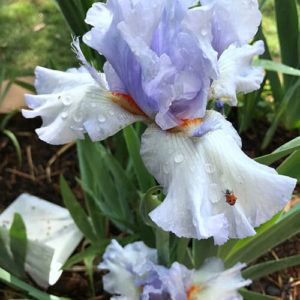
I have found some in my garden,
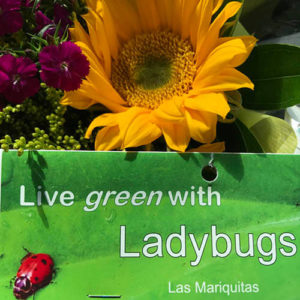
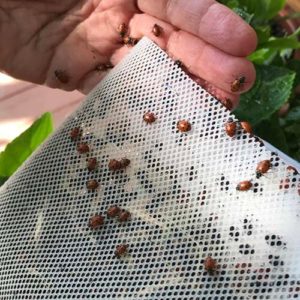
I read an article that an american oil painter has bought 50 Ladybugs at a “Garden Store” and let them go in her garden for taking cute reference photos of flowers with ladybugs :).
Have you ever bought Ladybugs?

or lot about Ladybugs
Coccinellidae (/ˌkɒksɪˈnɛlɪdiː/) is a widespread family of small beetles ranging in size from 0.8 to 18 mm (0.03 to 0.71 inches). The family is commonly known as ladybugs in North America, and ladybirds in Britain and other parts of the English-speaking world. Entomologists widely prefer the names ladybird beetles or lady beetles as these insects are not classified as true bugs
The group of around six thousand species worldwide has 207 in Europe and 90 in Hungary.
The majority of coccinellid species are generally considered useful insects, because many species prey on herbivorous homopterans such as aphids or scale insects, which are agricultural pests. Many coccinellids lay their eggs directly in aphid and scale insect colonies in order to ensure their larvae have an immediate food source.
Spots and Coloring
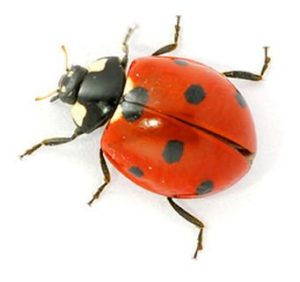
Ladybugs appear as half-spheres, tiny, spotted, round or oval-shaped domes. They have short legs and antennae.
Their distinctive spots and attractive colors are meant to make them unappealing to predators. Ladybugs can secrete a fluid from joints in their legs which gives them a foul taste. Their coloring is likely a reminder to any animals that have tried to eat their kind before: “I taste awful.” A threatened ladybug may both play dead and secrete the unappetizing substance to protect itself.
Seven dotted ladybug
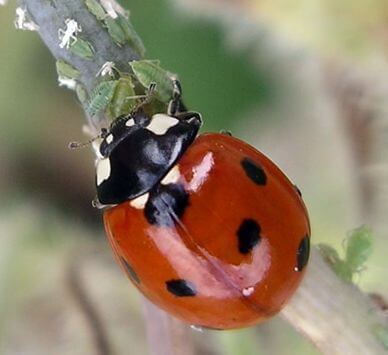
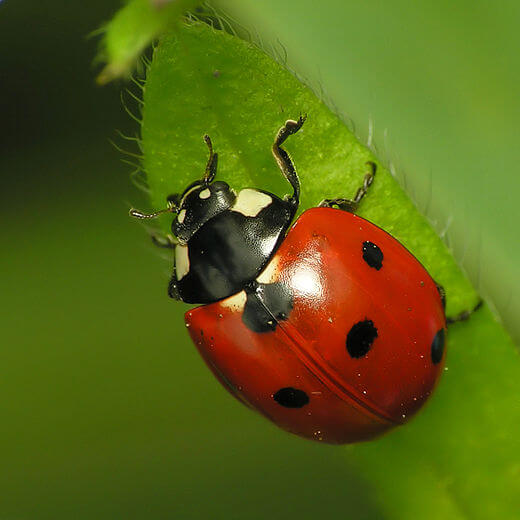
The seven-spotted ladybug (Coccinella septempunctata) is a well-known and widespread European beetle that is not only aesthetically pleasing, but extremely useful, so it is quite popular. He was settled in North America.
In 2011, it was chosen as the insect of the year in Hungary.
LIFE CIRCLE
The seven-spotted ladybug can be found practically everywhere where plants and lice on them are found. The adult specimens lay up to 400 eggs in the spring for the back side of the leaves and they hatch within a week. The predatory larvae are very agile and go through four stages until they are finally pupated. The last larvae skin will still remain on them for defenses.
Depending on the food supply and temperature, the larvae develop within 10-30 days and spend 3-17 days as a pupa. If the full transformation is fast, a second generation may appear for a month in the same year.
Adult ladybugs overwinter and soon die after reproduction. The pupa is also a predator during the three- quarters years long of his life. Usually, he defends himself as act dead or reacts with a blood splash to repel the attacker, and may even lose 10% of his body fluid.
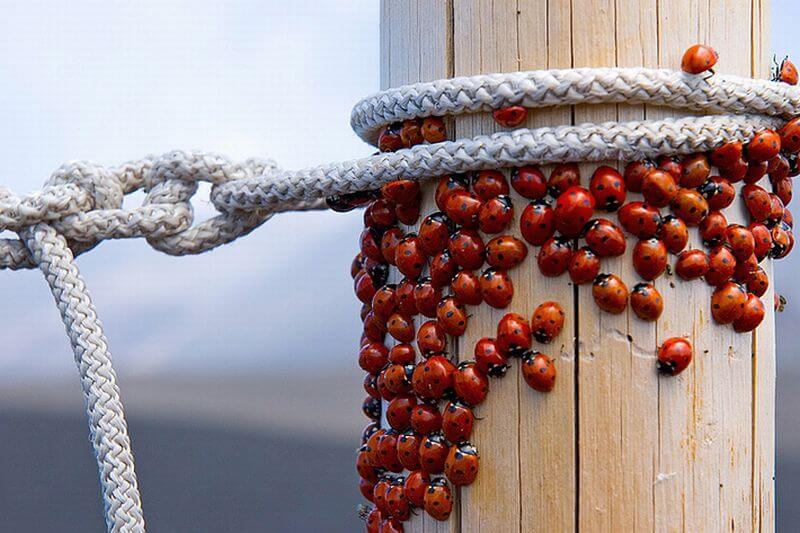
This article is in hungarian, but there are lots of interesting photo if different ladybugs here
Ladybugs are weather prophets
The warmer autumn days are still calling out the winter-retreating ladybirds. But they are just sunbathing, because there is hardly any lice in October. The ladybugs, while lonely during their active life, are grouped together in the winter rest. British researchers investigating the behavior of spotted beetles have discovered they are weather prophet as choosing the perfect place for winter.
Since the overwintering beetle does not waste your energy unnecessarily, it just hides as much as necessary.
It has been found that if they digging themselves deep into the ground, they will be very hard and long winter.
If you are just stay under the beams of the houses, or in the frames of window and shutters, the cold months will be mild, or the spring arrive early.
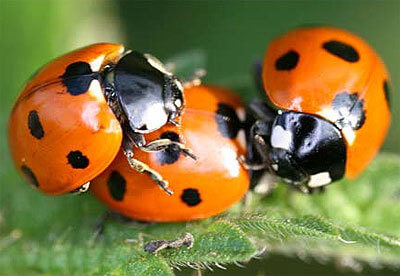
Because of its beauty it is in many children’s song.
‘Ladybird, ladybird, fly away home
Your house is on fire and your children are gone
All except one, and that’s Little Anne
For she has crept under the warming pan.’
I found some variation on this rhyme 🙂
or lot about Ladybugs
What are ladybugs?
Ladybugs are insects in the Coccinellidae family of the beetle order, Coleoptera. They are characterized by their oval‐shaped body and distinctive coloring.
Is there a difference between ladybeetles and ladybugs?
Although these insects are commonly called “ladybugs,” they are members of the beetle order, Coleoptera. The Coleopteraare unique from other orders in that they under go complete metamorphosis (that is,have larva and pupa stage sintheir life cycle), and their forewings have modified into a hardened cover (elytra) that protects the insect. “True” bugs belong to the order Hemiptera, and include box elder bugs,plant bugs,and squash bugs.
Immature True Bug
Thought axonomically incorrect, ladybeetles are still commonly referred to as ladybugs. Other frequently used common names are ladybirds or ladybird beetles.
How did ladybugs get their name?
The most common legendas to how ladybugs got their name is that during the middle ages in Europe, swarms of aphids were destroying crops. The farmers prayed to the Virgin Mary for help – and help came in the form of lady bugs that devoured the plant‐destroying pests and saved the crops! The grateful farmers named these insects “OurLady’sbeetles,” a name which had endured to present day.
What do lady bugs eat?
Both adult and larval ladybugs are known primarily as predators of aphids but they also prey on many other soft‐bodied insects and insect eggs. Many of these are agricultural pest such as scaleinsects, mealybugs, spider mites and eggs of the Colorado Potato Beetle and European Corn Borer. A few ladybugs feed on plant and pollen mildews and many ladybugs supplement their meat diet with pollen.
What eats ladybugs?
Ladybugs are not commonly eaten by birds or other vertebrates, who avoid them because they exude a distasteful fluid and commonly play dead to avoid being preyed upon. However, several insects, such as assass in bugs and stinkbugs, as well as spiders and to ads may commonly kill lady beetles.
How many different species are there in the US? In the world?
There have been over 500 species of ladybugs identified in the United States, and over 4500 in the entire world.
How long do they live?
After a female lays her eggs, they will hatch in between three and ten days, depending on ambient temperature. The larva will live and grow for about a month before it enters the pupal stage, which lasts about 15 days. After the pupal stage, the adult ladybug will live up to one year.
What do the different stages of the life cycle look like?
Life Cycle Stages

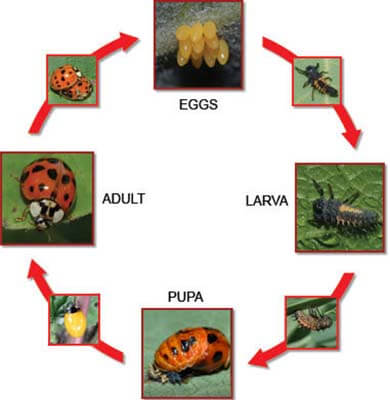
The majority of species have one generation per year, but there are also generations of generations. The mating season is in spring and summer. The number of eggs varies depending on the species: 3-300. The larvae emerge from the egg in 5-8 days.
What about ladybug anatomy?

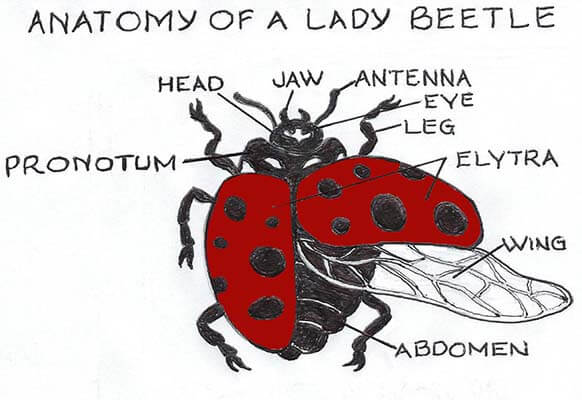
Why are they so brightly colored?
What’s with them in the house during winter?
How did non‐native species get here?

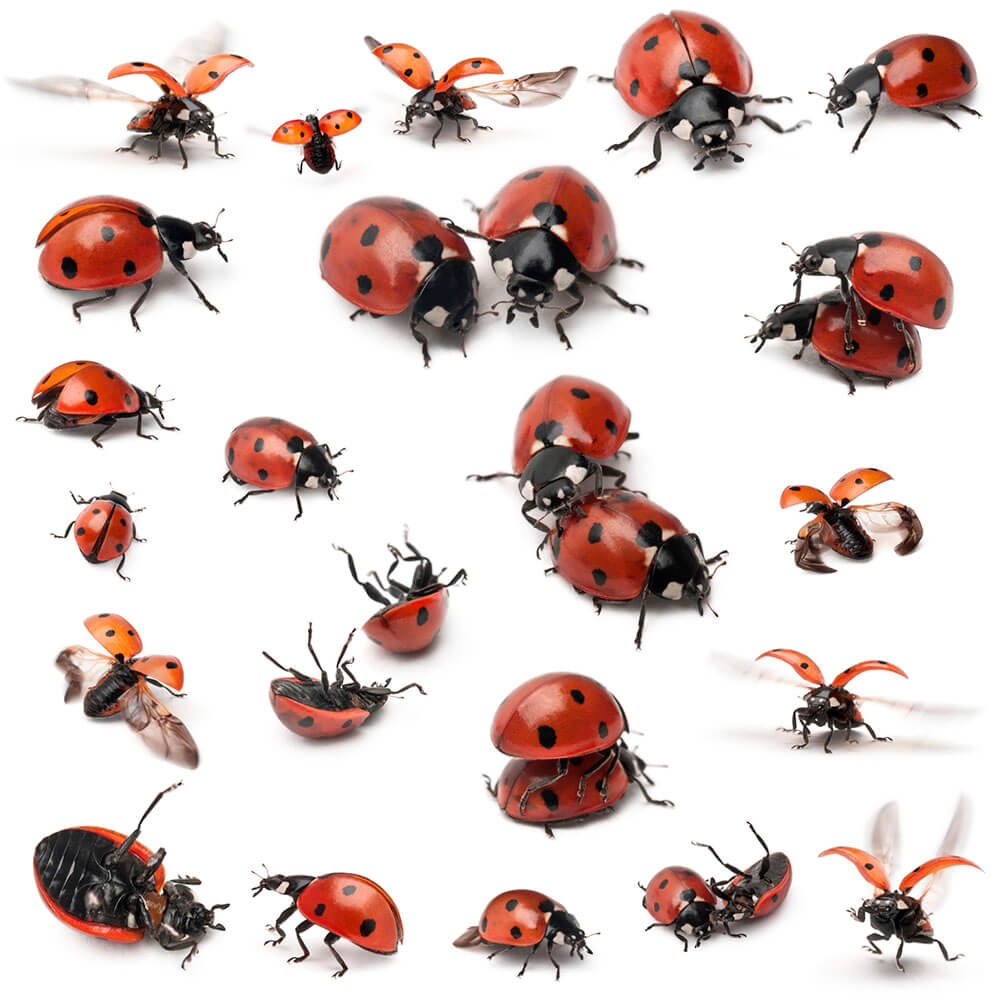
20 Ladybug or Ladybird Facts:
1) Ladybugs are a type of beetle.
2) Some ladybugs have no spots and others have up to 20 spots.
3) To help defend themselves, ladybugs play dead. They also can release a yellow fluid that other bugs find stinky.
4) The color of the ladybug sends off the message to its predators that it may taste bad or be poisonous.
5) Ladybugs cluster together as a way to “deter predators by increasing the concentration of their smell and their warning coloration.” Thanks to Professor Rick Lee for this fact!
6) When the temperature is near 60 degrees Fahrenheit or around 16 degrees Celsius, the ladybugs become active.
7) Ladybugs are both male and female.
8) A ladybug can live up to a year long.
9) There are two sets of wings. The outer set is the hard shell for protection, and the inner set are what it uses to fly.
10) Ladybugs are very helpful to a garden as they eat aphids and mites, which are bugs that are harmful to plants.
11) An adult ladybug can eat up to 50 aphids in a day.
12) Ladybugs taste and smell with their antennae.
13) A ladybug lays its egg on a leaf. They are yellow eggs that turn white.
14) They come out the egg as larvae (Lar-VEE). If there is just one, it is a larva.
15) The larvae resemble tiny black alligators.
16) The larva sheds its outer skin, which is called molting. This happens after it has eaten too much that it’s skin becomes too tight.
17) After the larva is done molting, it becomes a pupa.
18) The pupa sticks itself to a safe place where it will not move. The pupa breaks open as the ladybug comes out.
19) The ladybug’s body goes from being soft with no spots to the hardened and spotted ladybugs we are familiar with.
20) The inner wings used for flying must dry before the ladybug can fly.

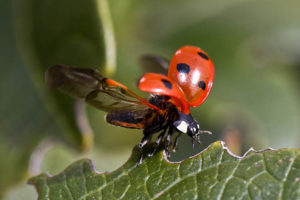
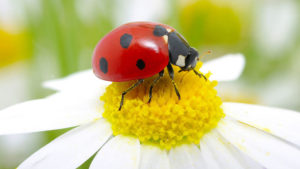
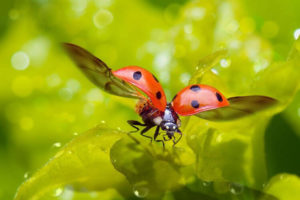
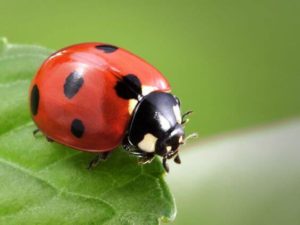
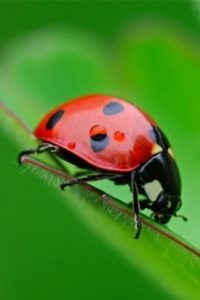
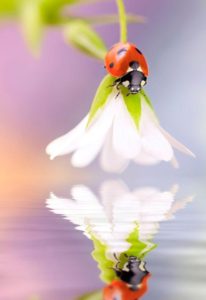
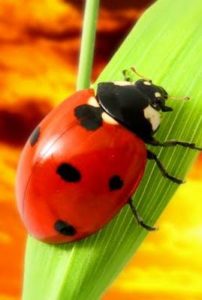
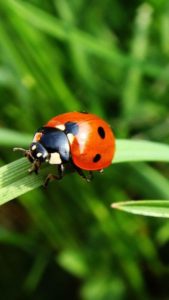
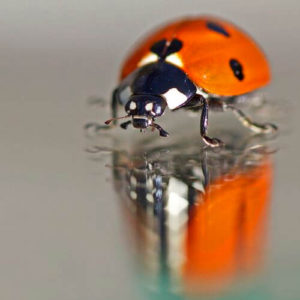
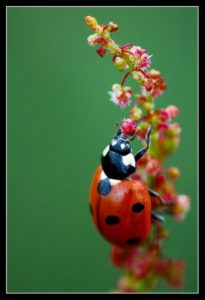

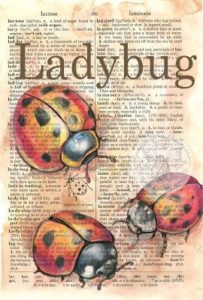
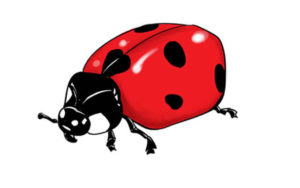
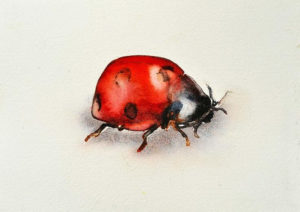
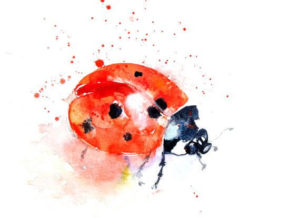
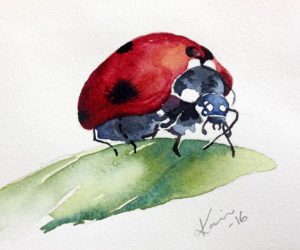



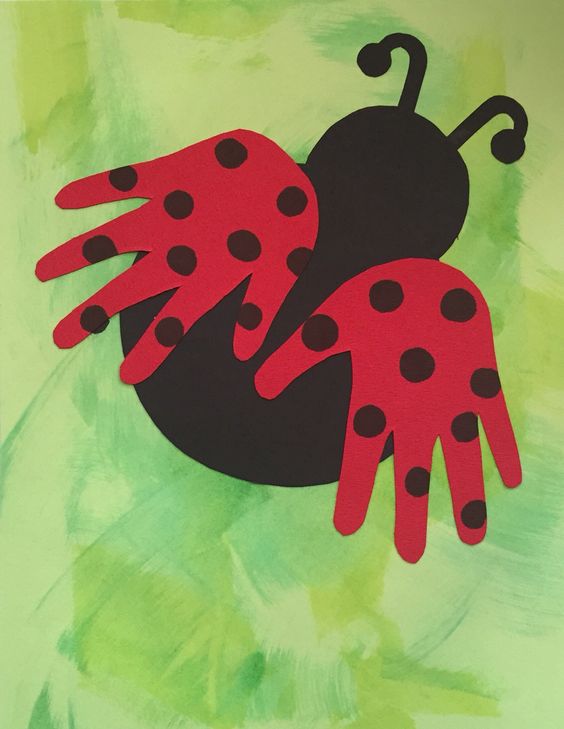
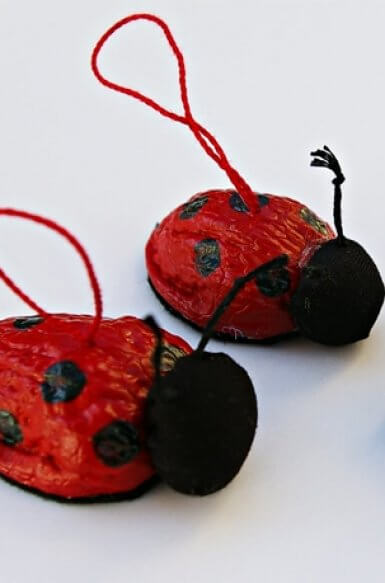
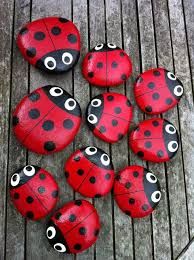
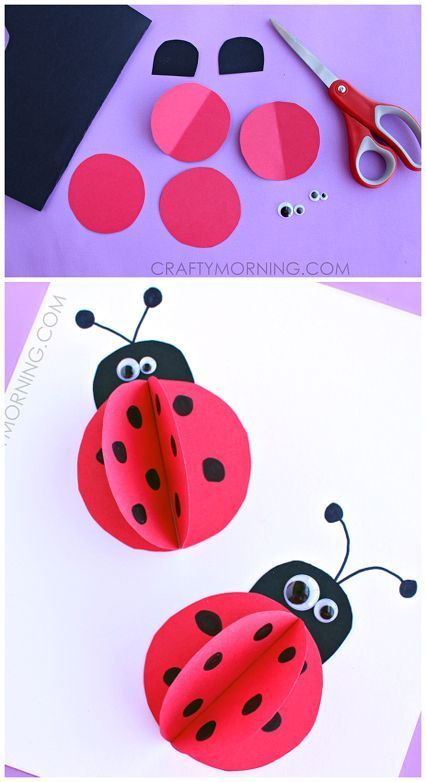

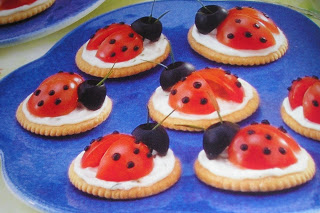


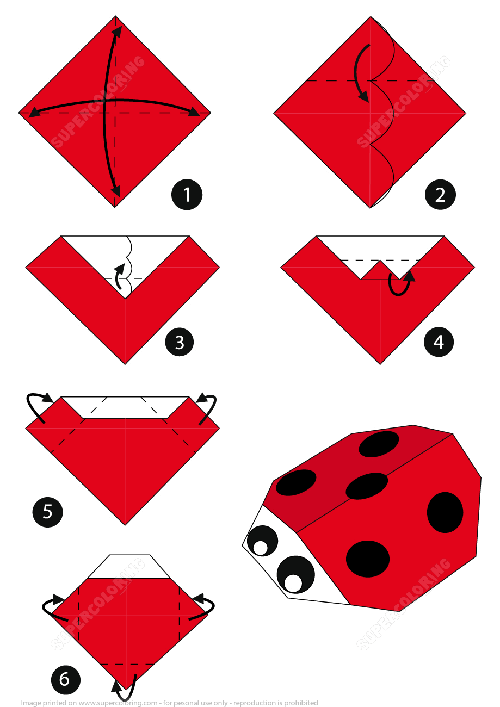

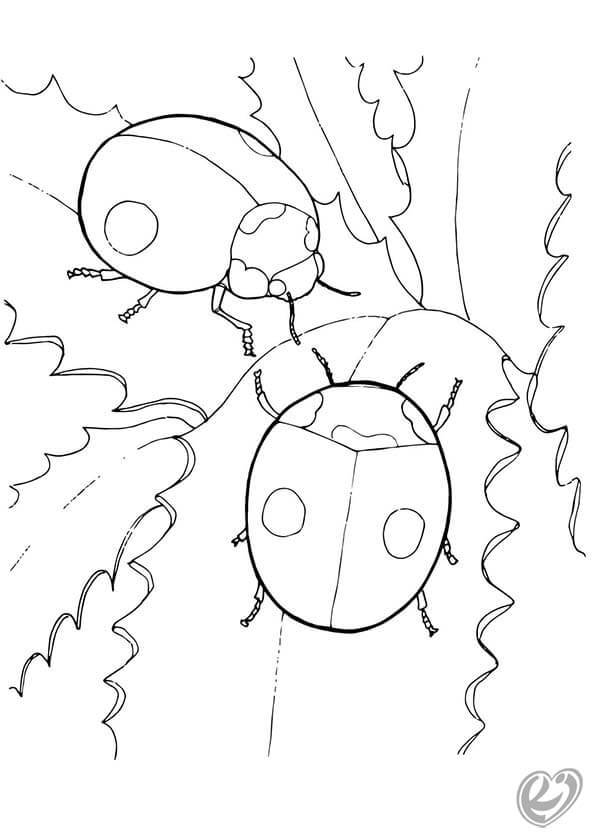
coloring katica 1
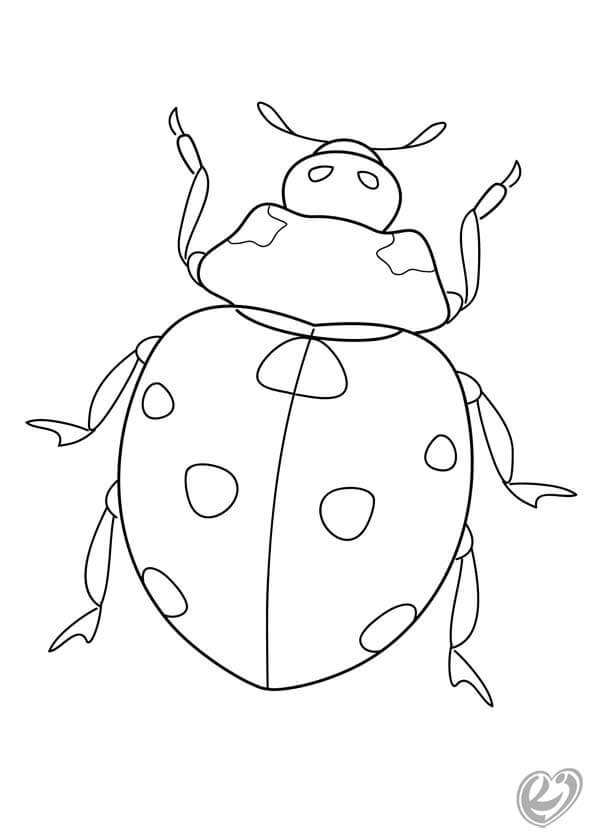
coloring katica 2
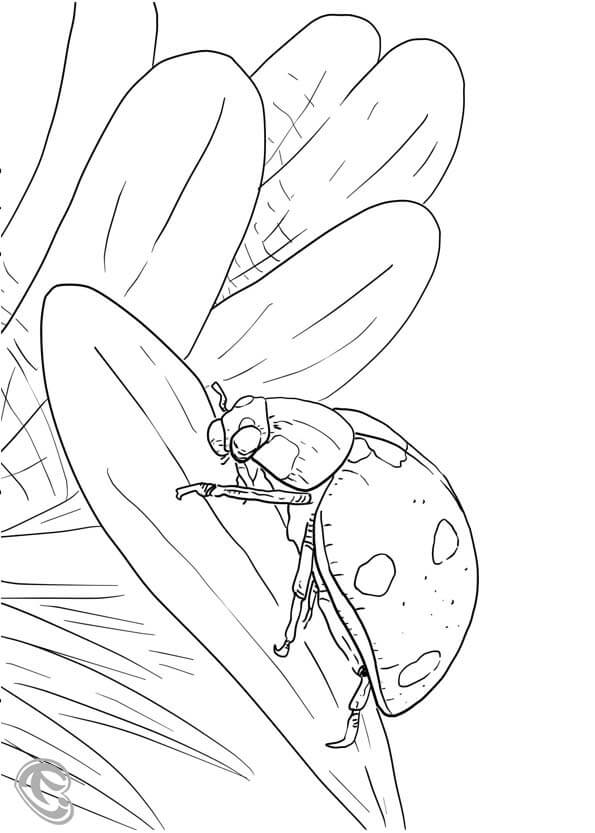
coloring katica 3
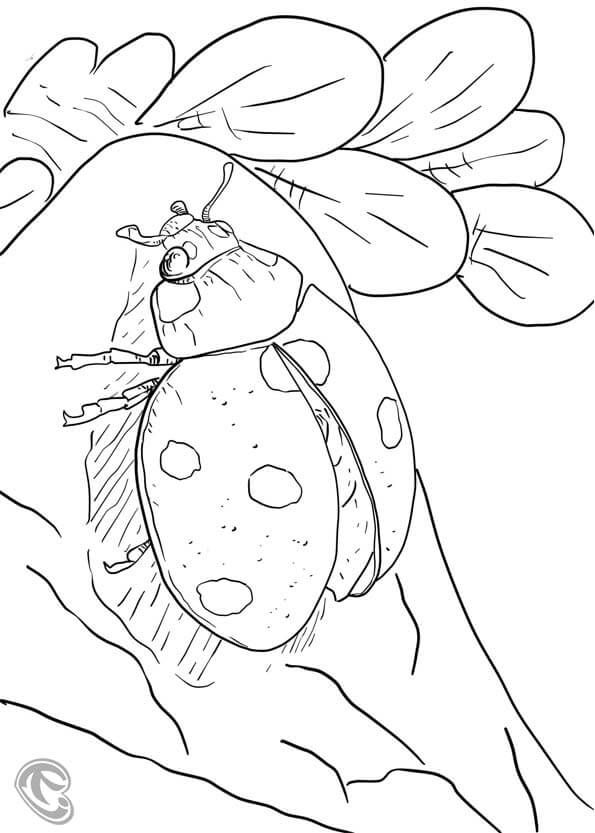
coloring katica 4

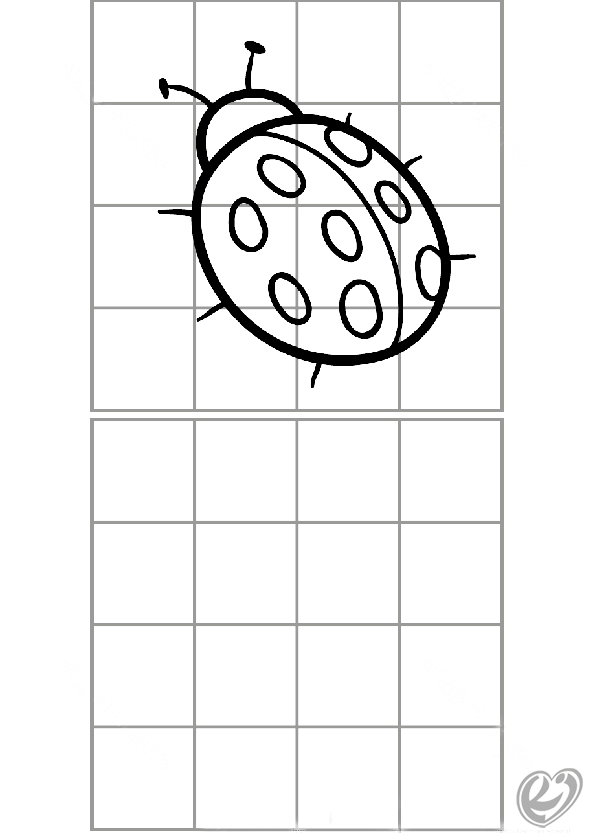
This is a drawing practice homework.
I’m making for a time now a ‘how to improve your drawing skill’ workshop where there are lot of drawing task. There are resize, upside-down etc in this series 🙂 One of the easiest is like you see below.
Draw this ladybug in the same size to the empty splitted square. Please don’t see the whole picture when you draw only 1 little square at a time, and draw the lines exactly same to the empty square. You can even blanket the other squares. This is what we draw in the kindergarden and one of the many task that I made. I practiced these ‘tests’ with children and it was interesting that some was easy for them (what I thought will be hard) and others were hard work.
I’m interested in what do you think? Anyway this is a good practice for copying what we see on photo.

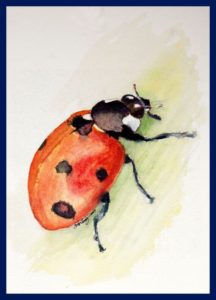
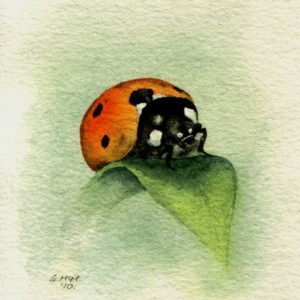
These are the ready paintings
You can follow how I paint the in the 3 little videos.
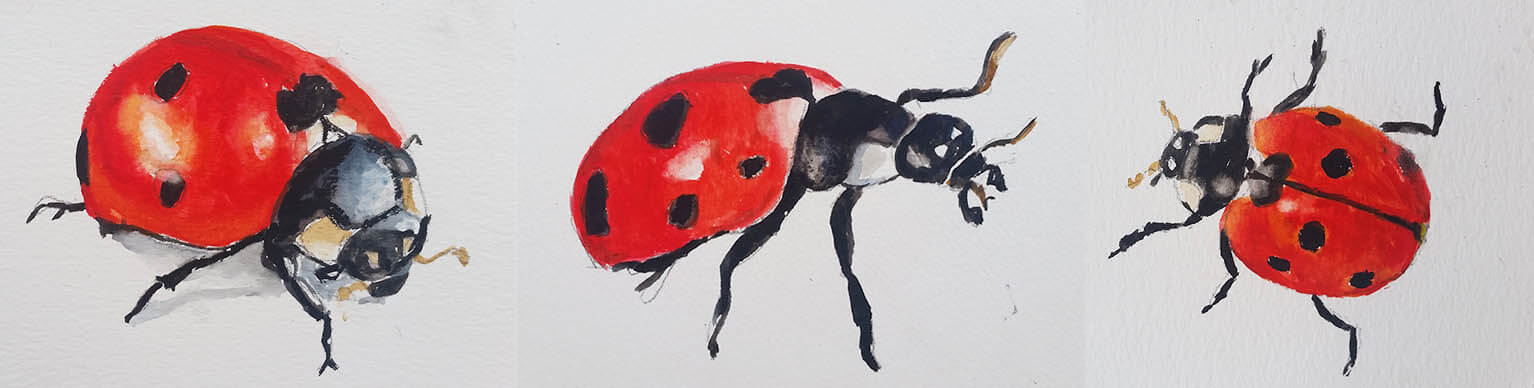
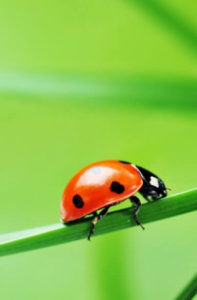
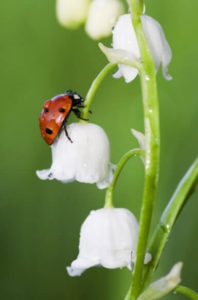
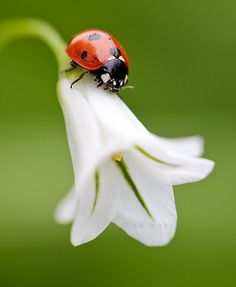
reference photos:
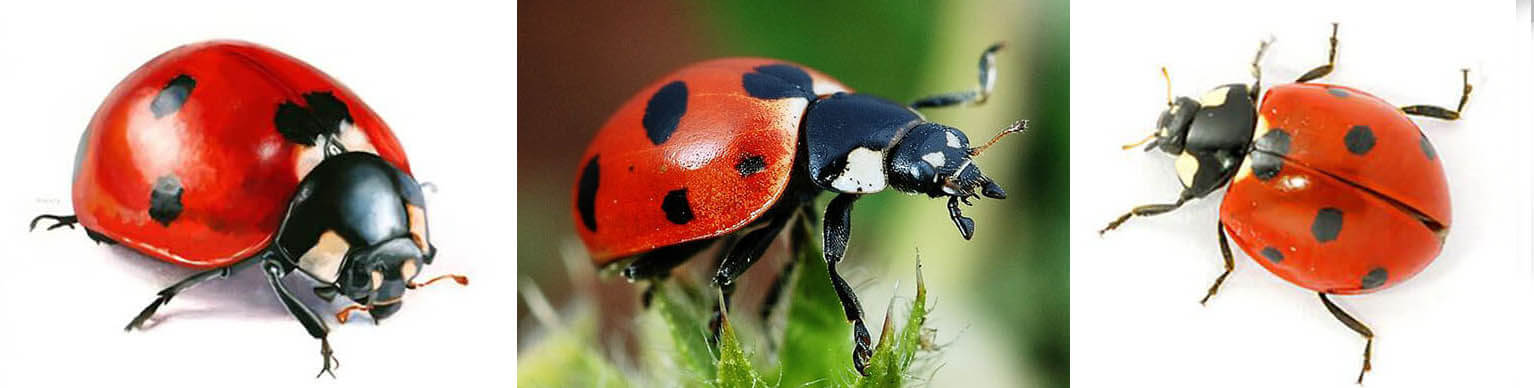
1 video realtime
password: natureartlove



This is a quick painting when you have 15 minutes just try it.
I suggest to wait a bit to dry the black and red because it can make a bit mess 🙂
Important: In different sets has different blacks. In my Sennelier the black is a bit brownish, so better use the paynes grey. In the White nights set there is a real black. I prefer that and mix or add azure blue to the ladybird head as it has a little blue where shining ::)
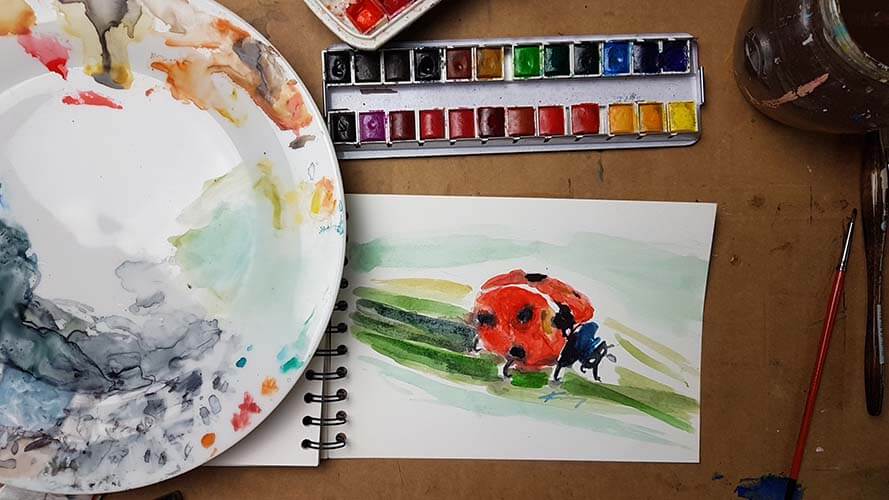
password: natureartlove
Do you like ladybugs? Are there any in your garden?
I would be very happy to see your painting will you upload them to the fb group?
and to the instagram with this hastag: #natureartwithildy #natureartsummer – hashtag your work from the course and follow hashtag to see what other students are creating! Follow me on Insta HERE. Happy creating!