

Our week’s theme PEACOCK,
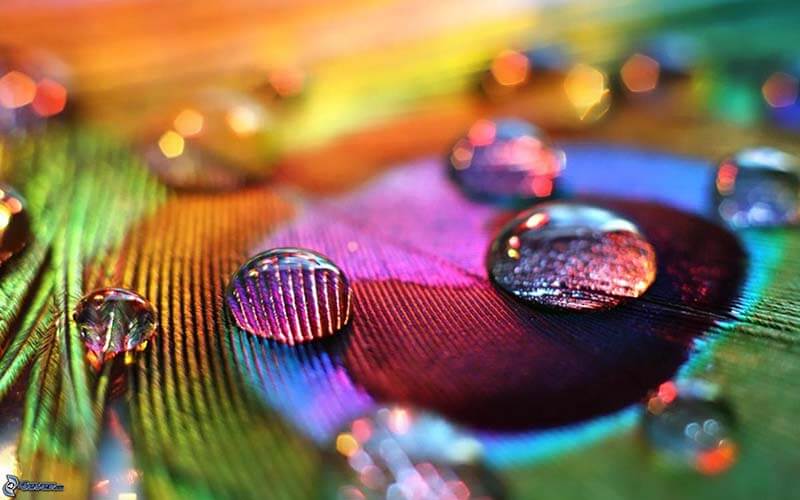
Spreading:
Peacock, any of three species of resplendent birds of the pheasant family, Phasianidae (order Galliformes). Strictly, the male is a peacock, and the female is a peahen; both are peafowl. The two most-recognizable species of peafowl are the blue, or Indian, peacock (Pavo cristatus), of India and Sri Lanka, and the green, or Javanese, peacock (P. muticus), found from Myanmar (Burma) to Java. The Congo peacock (Afropavo congensis), which inhabits the forested interior of the Democratic Republic of the Congo, was discovered in 1936 after a search that began in 1913 with the finding of a single feather.
With the three different species worldwide, the peacock, also known as the peafowl, lives naturally in Africa, Australia and parts of Asia. The medium sized, exotic bird is one of the most recognizable animals on the planet for its distinctive physical features. It spends much of its time on the ground in search of grains, seeds and insects. Peacocks can live up to 20 years old and are one of the more prized game birds in the world.
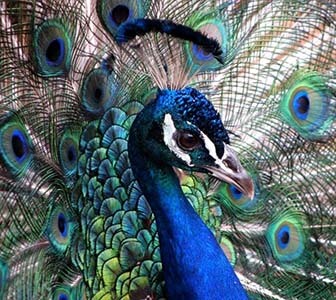
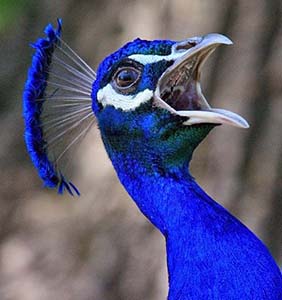
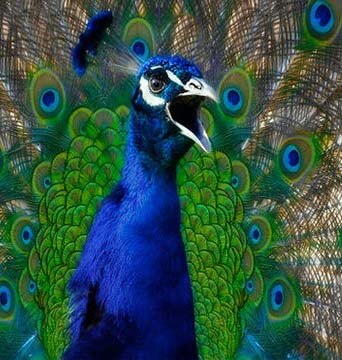
The most common a
BLUE PEACOCK
It lives wild in the forests of East India, Bangladesh, Nepal and Sri Lanka. India’s national bird. Alexander the Great (Alexander III of Macedon 356 BC – 323 BC), commonly known as Alexander the Great was a king (basileus) of the ancient Greek kingdom of Macedon) he was the first who brought to Europe, where he soon spread as a pet. It has been deployed in several countries, today there is in wildlife in Pakistan, the Andaman Islands, the Bahamas, California, the Hawaiian Islands, New Zealand, along the coast of Australia, the Rottnest Island, the Heron Island and the King Island.
Failed attempts to settle were made in the territory of St. Ilona, Madeira, Tahiti and the Dominican Republic. The peacock was well known in ancient times, and was used as an ormanent bird. King Solomon’s ships brought them from Iphir. In the Romans they were the holy bird of the goddess Juno. He was brought to Italy mainly from Carthage. In Cicero’s time, there were so many in Rome, they used their ornament feathers as fans, and they ate their flesh, especially their brains and tongues. As you know, Charles was very fond of this bird, its feathers were used by knights and ladies, but later the peacock-hat was fashioned in England. Peacock feathers are used to determine and distinguish the rank of Chinese mandarins.
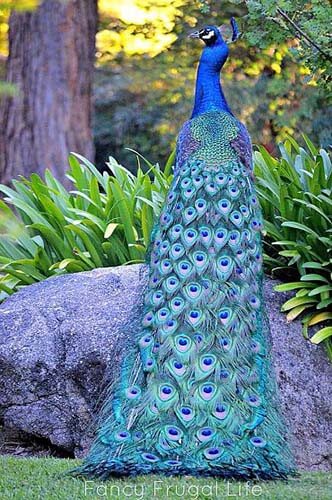
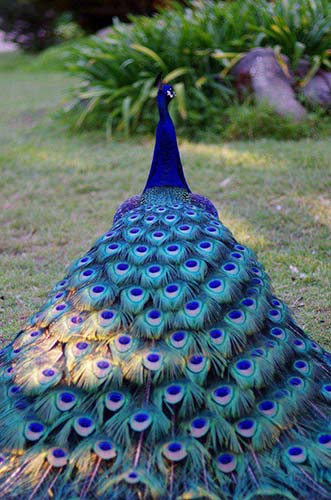
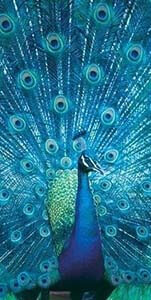
appearance:
Its head is feathery to the eye, featuring a feather bob on the head. The beak is relatively thick: its wings are short and rounded.
The sixth paddle feather is the longest.
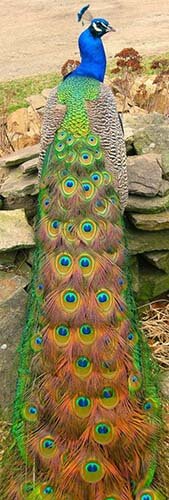
The male peacock’s plumage accounts for more than 60 percent of its total body length. It can reach more than six feet. Males fan their feathers when trying to court females and also in defense against male counterparts. Females peacocks, also known as peahens, often select mates depending on the size of that tail fan. Peacocks shed feathers during molting season, giving opportunity for collection.
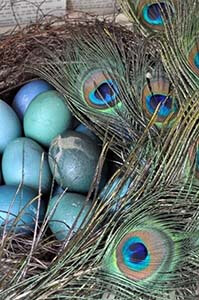
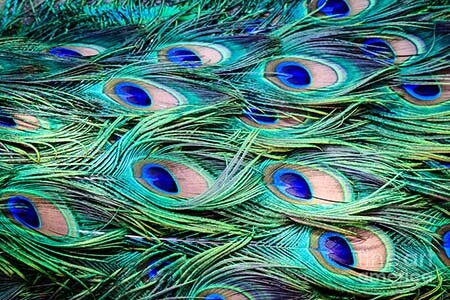
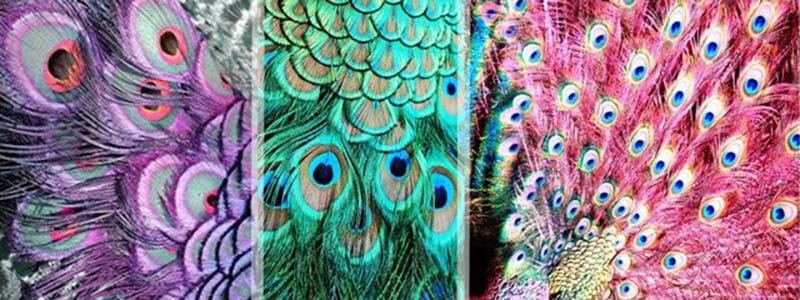
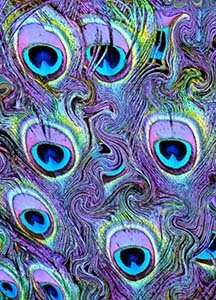
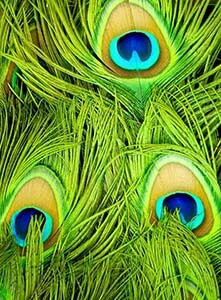
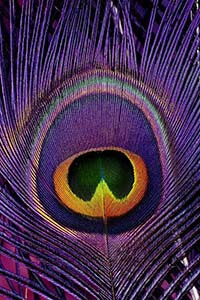
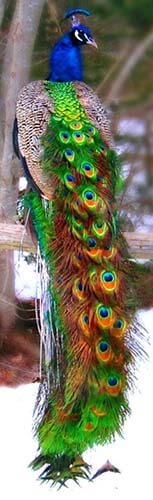
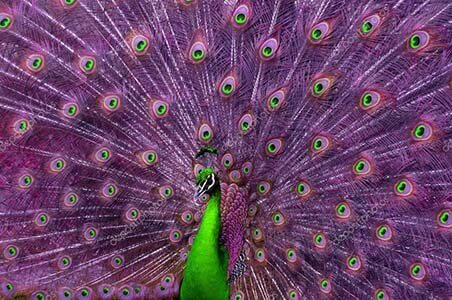
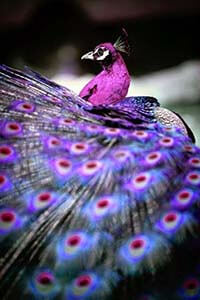
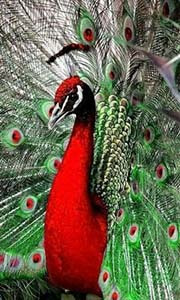
It’s not just the size of the peacock’s plumage that makes it special, but the eye on its tail feathers that set it apart physically from other medium-sized birds. Most males have upwards of 150 feathers, with the “eye,” which is usually a bright green, blue and gold, sometimes brown and in rare cases, white. Because of it’s elaborate styling, people use the peacock’s tail feathers for a variety of decorations, including masks and jewelry.
Male and female peacocks alike have a blue crest on top of their head, though it is not known to serve a purpose. The bird, which has an exotic blue body to go along with its distinct tail feathers, can reach 5 feet in height and more than 4 feet in width, while reaching a maximum weight of 13 pounds.
Peafowl is the term given to 2 species of bird which are members of the pheasant family. The Indian Peafowl (Pavo cristatus) is a native bird to the Indian subcontinent and the Green Peafowl (Pavo muticus) breeds from east Burma to Java. Males are known as ‘Peacocks’ and females as ‘Peahens’. The Peacock is the national bird of India. Peacocks are well known for their magnificent, beautiful tail feather displays during courtship.
Peafowl Description
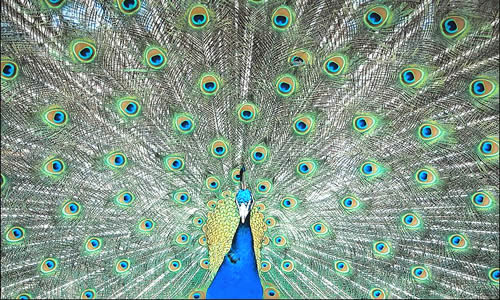
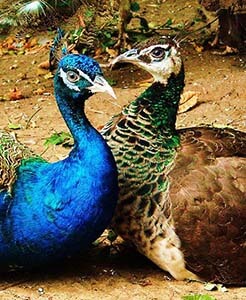
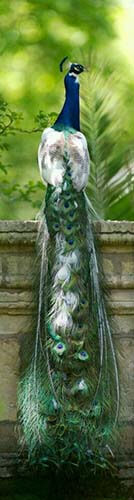
The Peacocks brilliant ‘train’ contains over 200 shimmering feathers, each one decorated with eyespots. The male Indian Peacock has iridescent colouring of blue and green on its head, neck and breast. Their long ‘trains’ are not the tail quill feathers but elongated upper tail feather coverts. The train is bronze and green and has a series of ‘eyes’ which are more prominent when the tail is fanned.
The male Indian Peafowls actual tail feathers are short and grey in colour and can only be seen from behind when the tail is extended and fully fanned. The males display their beautiful fanned trains as part of their courtship behaviour to the Peahens. During molting season, the males shed their train feathers and their grey quill feathers are more obvious.
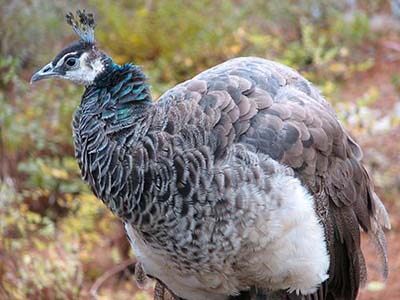
Female Peafowl lack the bright colours of the male and have a more duller appearance which is common in many other bird species. Peahens are generally brown in colour with lighter underparts. They also lack the long upper tail coverts. They may have some iridescent green colouring on their neck.
Both male and female Peafowl have crests on top of their heads which are also present on the Green Peafowl species. Green Peafowl differ in appearance to the Indian Peafowl in that the male has a green and gold plumage and their wings are black with a sheen of blue. Unlike the Indian Peafowl, Green Peahens are similar to the Green Peacocks only having shorter upper tail feather coverts and slightly less iridescent in some parts. In the months where the male has no train, it is difficult to tell females and males apart.
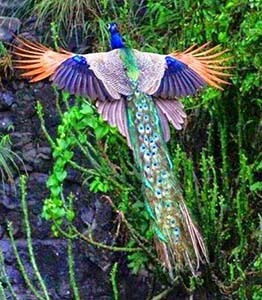
Peafowl are large birds with males measuring up to 2.3 metres (7.5 feet) in length and females being smaller at 86 centimetres (34 inches) in length. The tail length of the male Peafowl can be 4 – 5 feet. Peacocks weigh 9 – 13 pounds and Peahens weigh 6 – 9 pounds. Like other members of Galliformes, both male and female Peafowl have sharp, powerful metatarsal spurs also known as ‘kicking thorns’ which they use to defend themselves against predators. Their legs are strong and they have 3 strong toes facing forward and one facing backwards. Because their wing surface to bodyweight ratio is not large, most species of Peafowl are incapable of long flights.
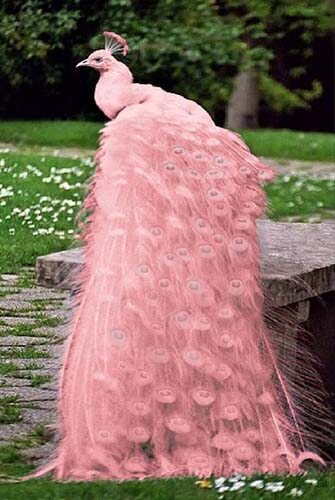
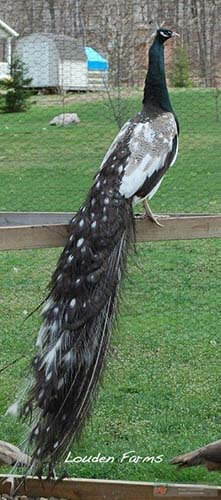
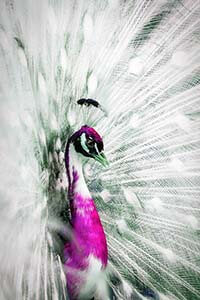
Apart from the Indian Peafowl and the Green Peafowl, 1 or 2 mutations have been developed by those kept in captivity. One of them is a white Peafowl species called the Indian White Peafowl. Another species found in the rainforests of Central Africa is the Congo Peafowl.
Peafowl Habitat
Peafowl are mainly ground-dwelling birds preferring forests and farmland. They can also be found in bushlands and rainforests. Many will nest on the ground while some will roost in trees.
Peafowl Diet
Peafowl are omnivores and their diet consists of plants and flower petals, seeds, ants, termites, ticks and locust. They will also eat small reptiles such as young Cobra snakes, arthropods and amphibians.
Peafowl Mating Behaviour and Peafowl Reproduction
The Peacock is a classic example of ‘sexual selection’ influencing evolution. Studies prove that Peahens prefer to mate with the most impressive males displaying the largest number of eyespots in their tails .Studies have shown that the males with the largest eyespots tend to father bigger, healthier and fitter young that are more likely to survive, proving that the beauty of the Peacock is more than skin deep. Peacocks molt their tail feathers around August time and begin to regrow them.
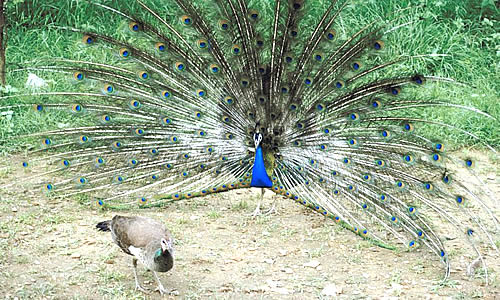
During courtship, the male spreads his train of feathers and makes it shiver to attract the female. The male will often back towards the receptive female, swinging around to confront her with the magnificence of his display before taking several steps back and bowing. The display is followed by the male vocalising very loud calls known as ‘crows’ that are even louder than a Roosters crow. If the Peahen is impressed, she will join his harem of females, for like most male birds with a highly ornamented plumage, the Peacock is polygamous.
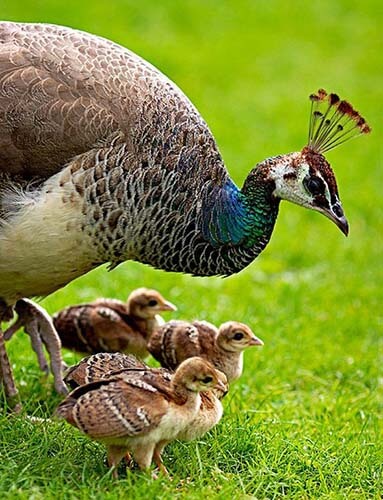
Females are well equipped for their maternal roles with their discreet, cryptic colouration. Males play no part in rearing the young and being so conspicuous, would probably be a liability in the way of camouflage.
Peahens generally reach breeding age at around 2 years, Peacocks at around 3 years. Peahens lay 6 – 12 brownish, buff coloured eggs from April to September. They are laid in a nest which has been scratched out in the ground and lined with grass. The Peahen will sit upon the eggs and incubate them for 28 days.
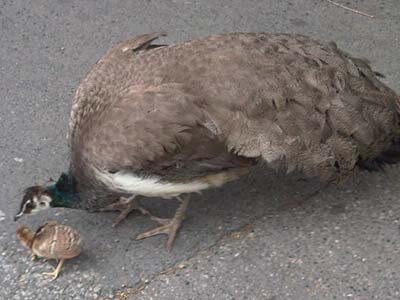
Peachicks are born weighing 3.6 ounces (103 grams), fully feathered and can fly within a couple of weeks. They must learn to fly quite soon in order to stay with their mothers when roosting in trees to ensure survival from predators. Peachicks are taught how to eat and how to make a variety of sounds by the Peahen. Under the age of 1 year, young Peafowl are called ‘Peachicks’. A males train of feathers will not be present for 3 years and will develop over this time. The life span of a healthy Peafowl can be 40 – 50 years.
To supplement its normal diet of grains and insects, peacocks will occasionally eat small mammals and reptiles. The male peacock mates with up to six different peahens every mating season. Females lay up to 8 eggs, incubating them over the course of a month by sitting on them. Peahens rear babies without the help of the male. Wild dogs, tigers and raccoons are predators peacocks fear.
Peacock Facts
Peacock Most people use term “peacock” to describe both male and female birds, but peacock is actually a name that refers to male peafowl. Peafowl belong to pheasant family. These birds are native to Asia. There are two species of peafowl: Indian Peafowl and Green Peafowl. Both types are endangered because of the habitat loss, smuggling and predation.
Interesting Peacock Facts:
- Male peafowl is called peacock while female is called peahen.
- They are one of the largest flying birds. Their length (including tail) can reach 5 feet. They can weigh between 8-13 pounds.
- They are omnivores (eat both plants and animals). They like to eat insects, arthropods, amphibians, flowers, seeds…
- Their main predators are tigers, leopards, mongoose… When they sense a danger, they fly and hide in the trees. They spend nights on trees for the same reason.
- Family of peafowl is called “bevy”.
- Group of peafowl is called “party”.
- Beautiful and colorful tails are characteristic only for the males.
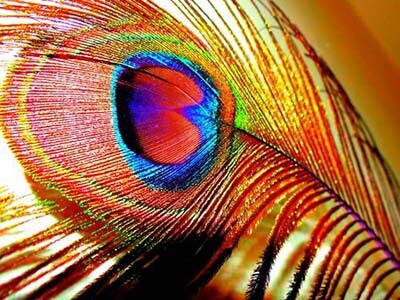
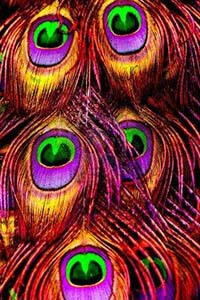
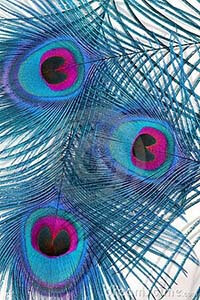
- Colors of the tail will look different every time you change the angle of looking because of the reflection of the light. Tail feathers have eye-like spots, surrounded with red, green, gold and red feathers.
- Tail makes 60% of peacock’s total length.
- Peahen chooses its partner by the length, width and coloration of the tail.
- Peacocks are polygamous (mate with more than one female) and usually form a harem that consists of 2-5 females. Left alone peacocks are very sad and heart-broken.
- Although very beautiful, peacocks produce unpleasant sounds.
- Females lay 3-5 eggs. Young birds will hatch after 28 days.
- One day old baby peafowl can walk, eat and drink without assistance.
- Peafowl live up to 20 years both in the wild and in the captivity.
- For centuries, peacock feathers have decorated the garments of the nobility.

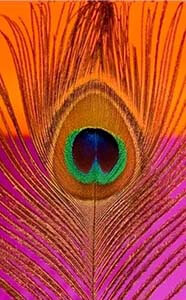
The Physics of Peacock Tail Feathers Is Even More Dazzling Than We Realized
Male peacocks shake their brilliantly-hued, long tail feathers to attract females in a courtship display known as “train-rattling.” But scientists had never closely examined the biomechanics behind this behavior.The frequency at which those feathers vibrate can enhance this iridescent display—even as the eyespots remain almost perfectly still.
The courtship behavior of peacocks is well known, and until quite recently, scientists had assumed that the female of the species (peahens) simply preferred males with longer feathered trains and more eyespots—the more brightly colored, the better. Precisely how the males produced those shaking displays wasn’t deemed an important factor, which might be why nobody bothered to investigate the matter. More recent research indicates the peacock courtship process might be quite a bit more complicated than this.
They found that the longer the train feathers, the faster the males would shake them during courtship displays—perhaps to demonstrate their superior muscular strength. However, they also vibrate their feathers at or near the natural resonant frequency, enabling them to produce strong displays while using the least amount of energy.

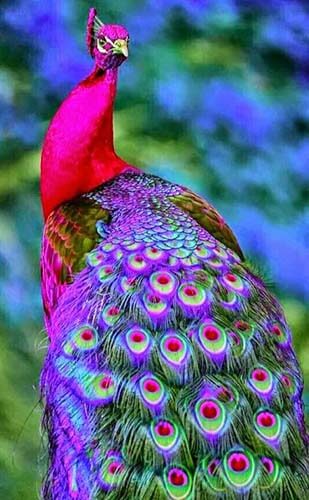
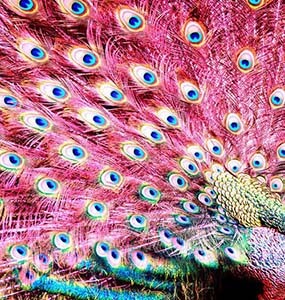
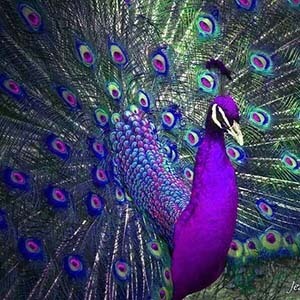

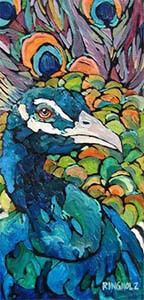
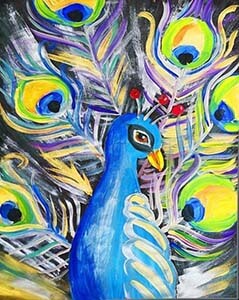
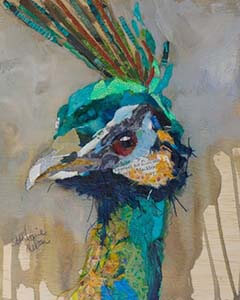
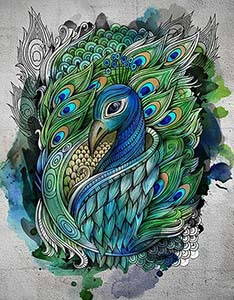
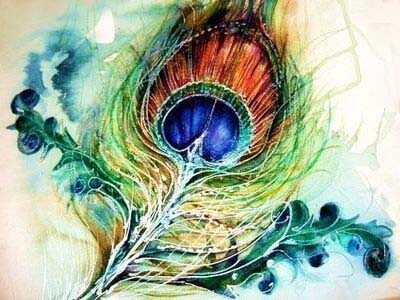
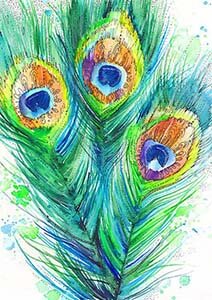

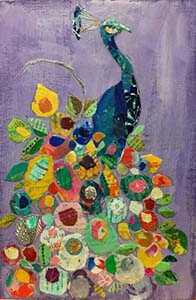
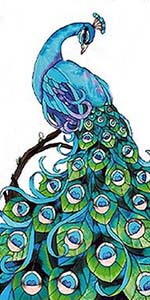
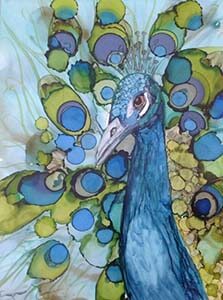

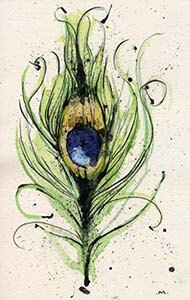


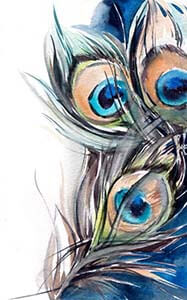
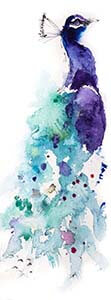
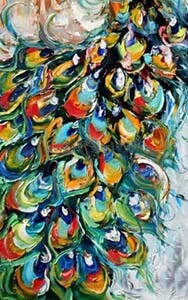
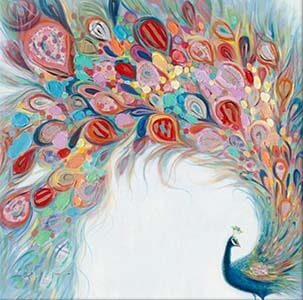
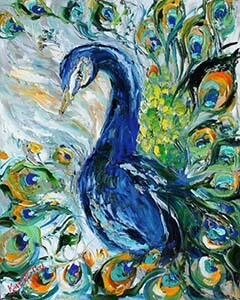
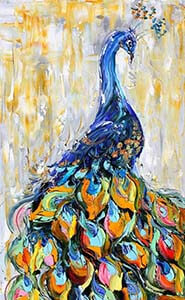


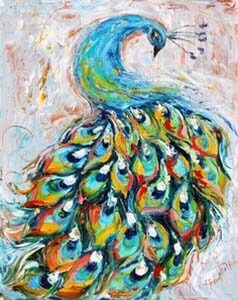
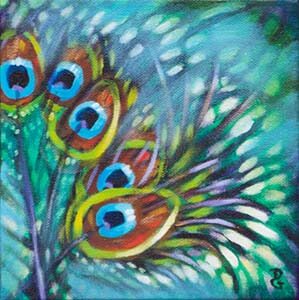
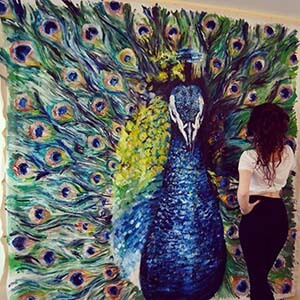
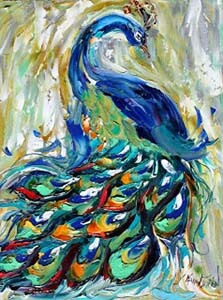

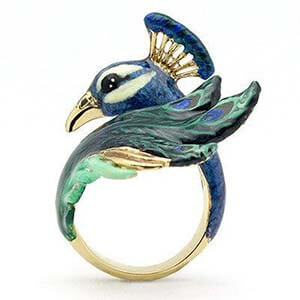
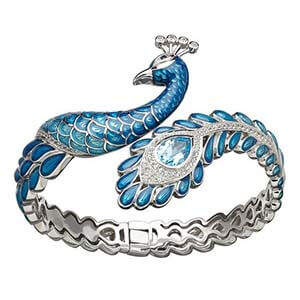
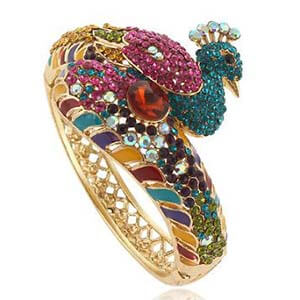
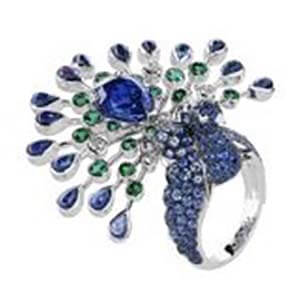
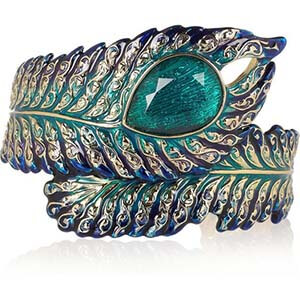
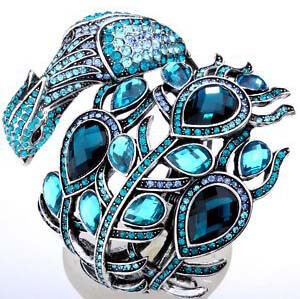
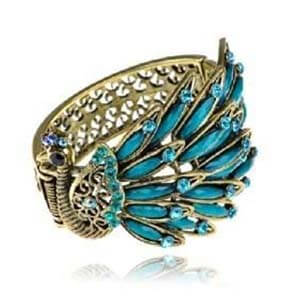
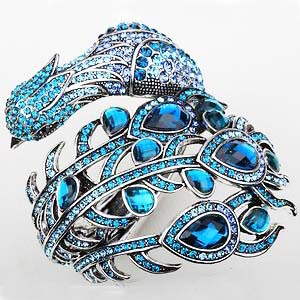
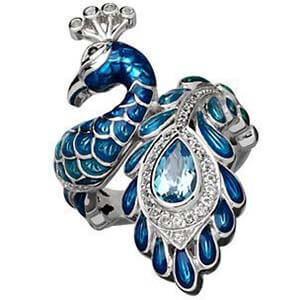
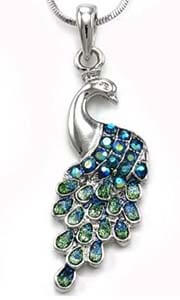
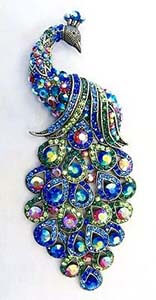
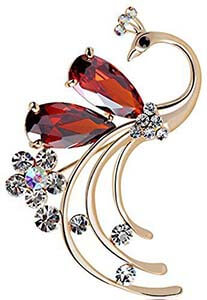
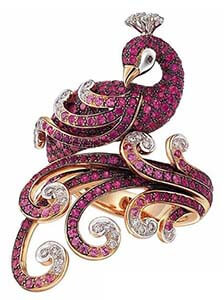
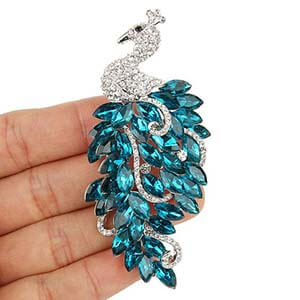
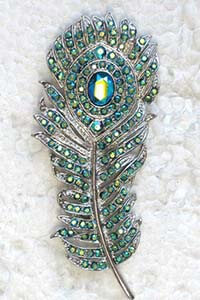

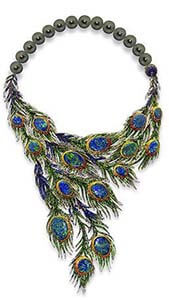


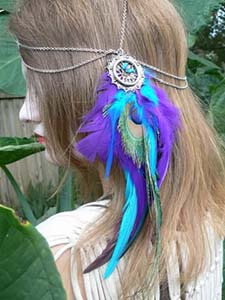

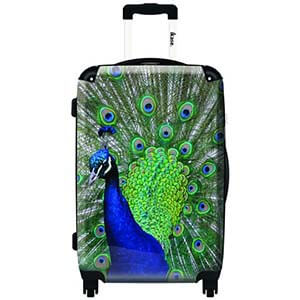
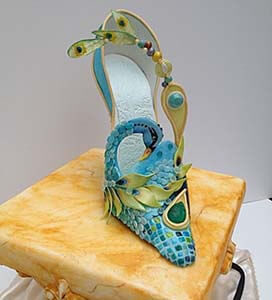
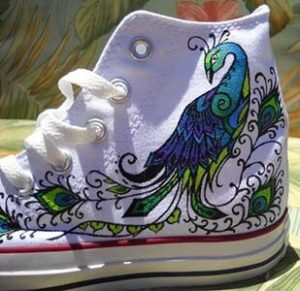
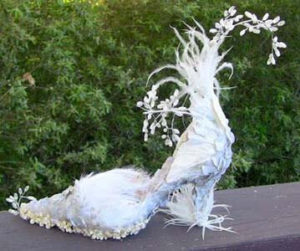
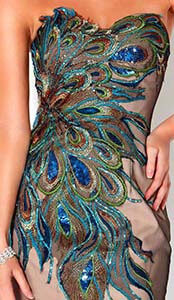
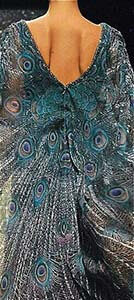
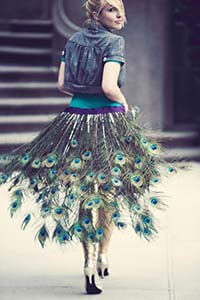
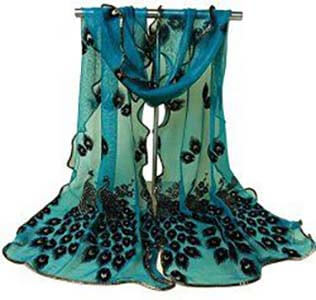
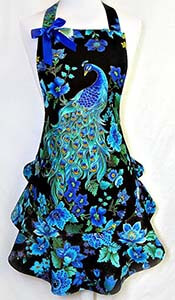
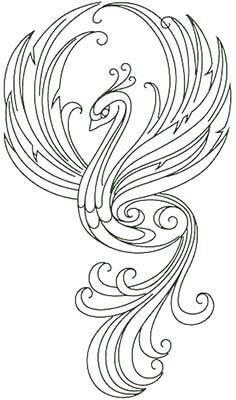
BAGS, SHOES, CLOTHES, FURNITURES, CAKE or OTHER USEFUL OBJECTS very popular in design










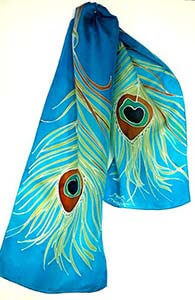
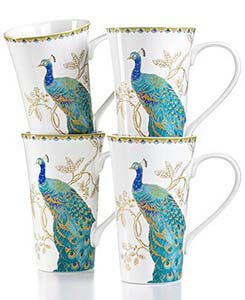
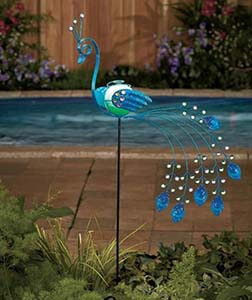
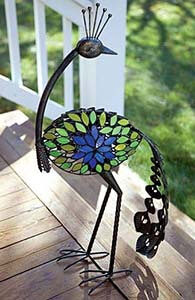
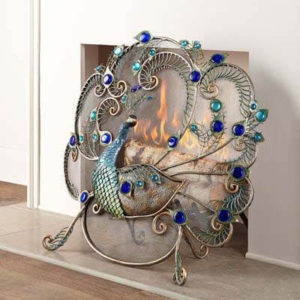


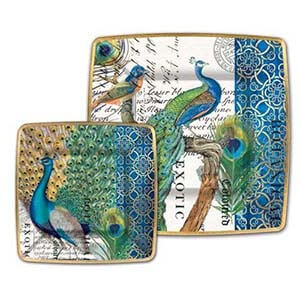

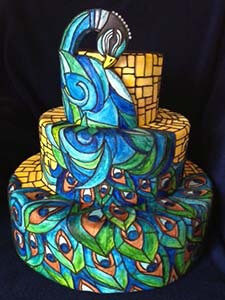


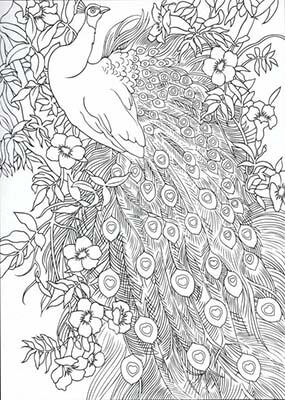
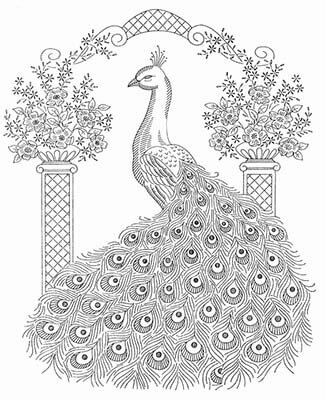
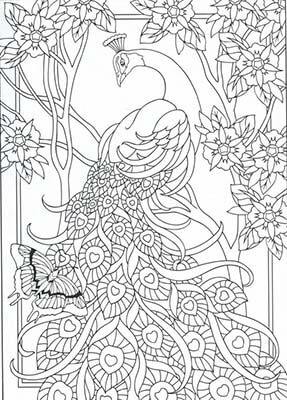

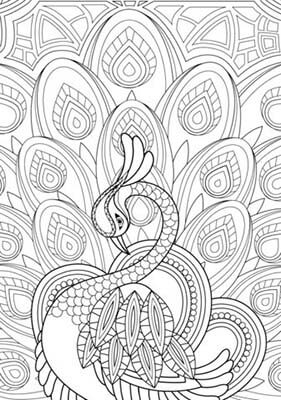

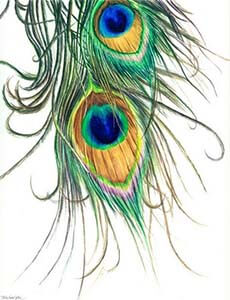
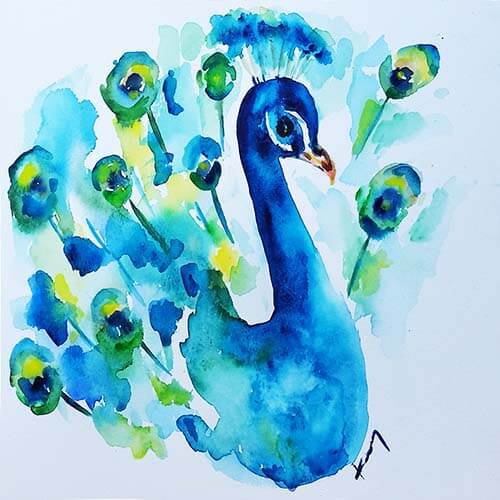
- 30x30cm 300gr aquarelle paper
- aquarelle paint, blues, greens, yellow, black
reference photo
ready painting:
VIDEO timelapse
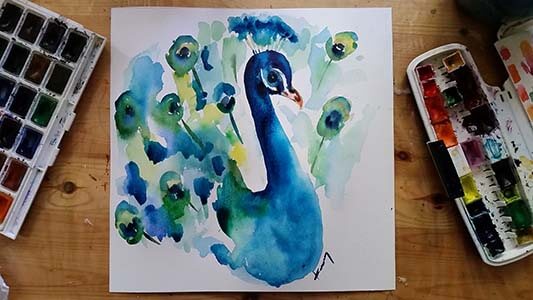
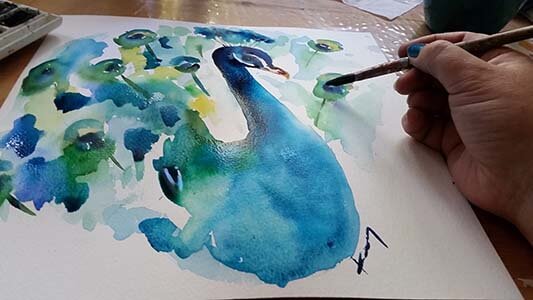


Have you seen peacock? Usually they are in the Zoo 🙂
I would be very happy to see your painting will you upload them to the fb group?
and to the instagram with this hastag: #natureartwithildy #natureartsummer – hashtag your work from the course and follow hashtag to see what other students are creating! Follow me on Insta HERE. Happy creating!